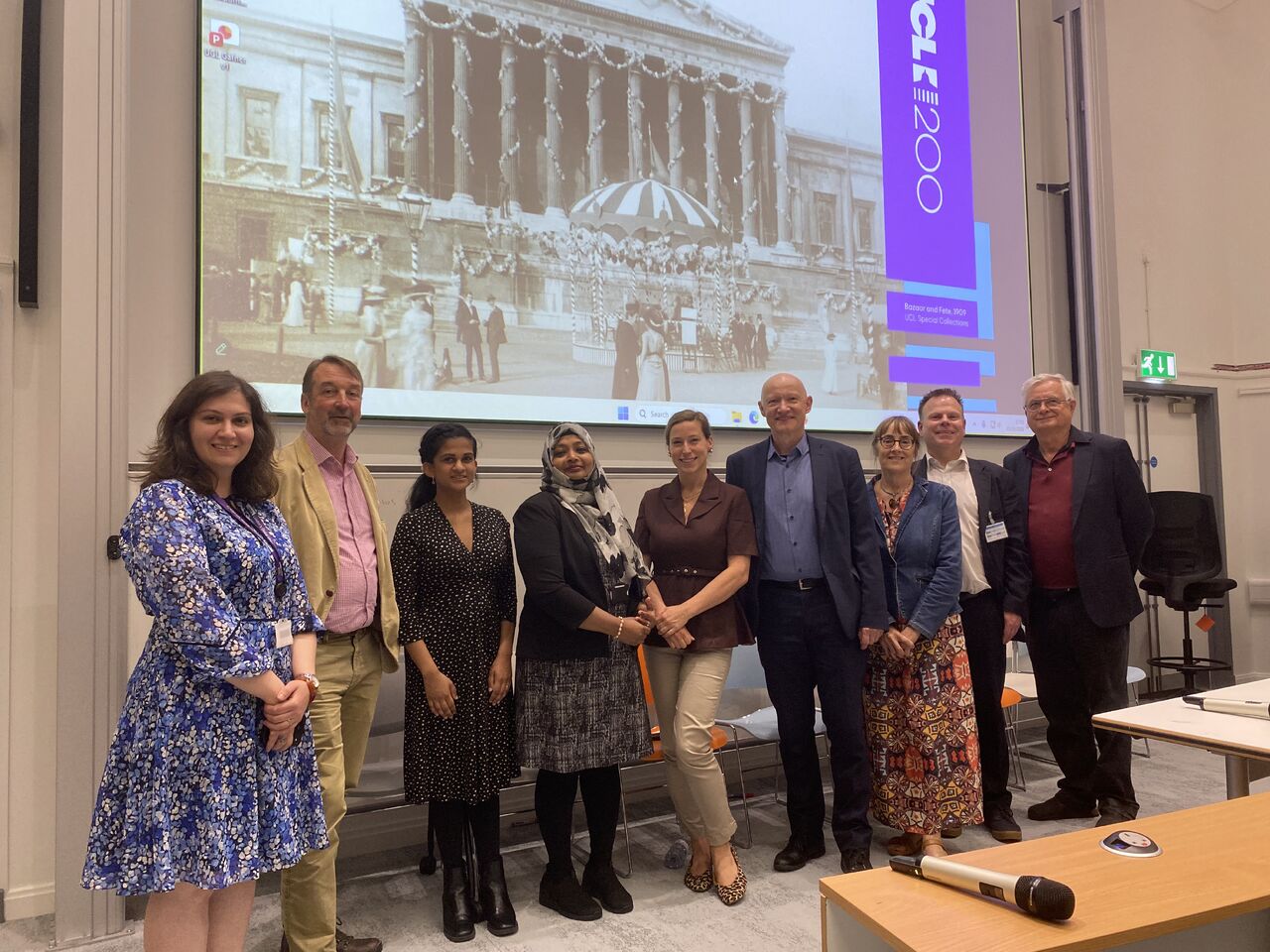
It was super to attend the UCL annual Spices and Medicine Symposium on June 3rd, and to be invited to be on the panel. I’ve attended the event many times over the years and it brings together experts in the field interested in ethnobotany, pharmacology, and this year there was more of a focus on sustainability and supply chains.
Dr Shelini Surendran from the University of Surrey spoke about the research on Lion’s Mane (Hericium erinaceus) and concluded that much of the research is at an early stage so it may well be worth the hype but we don’t quite know yet. I was interested in the gut research and the mushrooms may have prebiotic potential and protect the epithelial lining and reduce inflammation. Other research showed cognitive benefits in cognitively-impaired older adults, although again more research is needed.
Dr Anthony Booker and Dr Proma Khondkar from Westminster University talked about the hidden dangers of aflatoxins in food supplements which was frankly terrifying. The toxins are mycotoxins from Aspergillus species – soil moulds that thrive in warm and humid conditions. They survive cooking and are difficult to destroy. Tony and Proma talked through which herbs and spices are most at risk, how harvest and drying affected mould growth, and how there is a regulatory gap and not enough testing for the toxins. Moral of the story must be always purchase your food or spice supplements or raw materials from reputable suppliers.
Next up was a guest lecture by the fabulous Dr Stefan Gafner from the American Botanical Council, who talked about the trailblazing Botanical Adulterants Prevention Program (BAPP). They carry out intensive research and investigations into adulteration in the market and have produced over 100 reports to support the herb and spice industry. Scarily many manufacturers do not carry out the required tests, and the lengths that criminals would go to to adulterate raw materials and finished products was staggering. Adulteration is common in popular herbs like Ginkgo, Black Cohosh and Echinacea. Strategies included using different parts of the plant – often chemically stronger and can have adverse effects, add chemical markers to trick the lab testing, add colourants or even pharmaceutical drugs to mimic the actual raw material.
Stefan pointed us to a recent test of lavender products sold on Amazon as a typical example of adulteration. Out of 28 products tested a staggering 3 passed with flying colours and contained Lavandula angustifolia essential oil, with all the others having some form of adulteration such as dilution or inclusion of other fats and chemicals.
Panel discussion
All of the speakers joined a panel which also included leading Medical Herbalist Dr Chris Etheridge who is Chair of the British Herbal Medicine Association, and Dr Oksana Pyzik from the UCL School of Pharmacy. We had many excellent questions and had a rich discussion on regulation and how to learn from best practice such as the use of THRs in the UK. The panel suggested we need for better herbal education to improve the science base but also educate healthcare professionals given the consumer demand for supplements, and we need better awareness for the consumer. There is the opportunity to learn from countries who have introduced robust testing and regulation of herbal supplements.
Overall we decided there should be more plant education in schools, and that you are encouraged down a “human or plant” route. A love and awareness for plants should be encouraged through gardening and growing plants in schools. I mentioned a number of University projects that were raising the profile of herbs and good food to students – the Met MUnch initiative, the kitchen gardens at Bath Spa that nutrition students use to grow their own food, and the amazing Bristol University botanical gardens where in my role at the National Centre for Integrative Medicine we take doctors and other healthcare providers, along with medical students, to learn about herbs.
I thoroughly enjoyed the conversations and catching up with old friends and new fellow herb-heads. Its always nice to go back there as I did a post-doc at the Institute of Child Health just across the park.