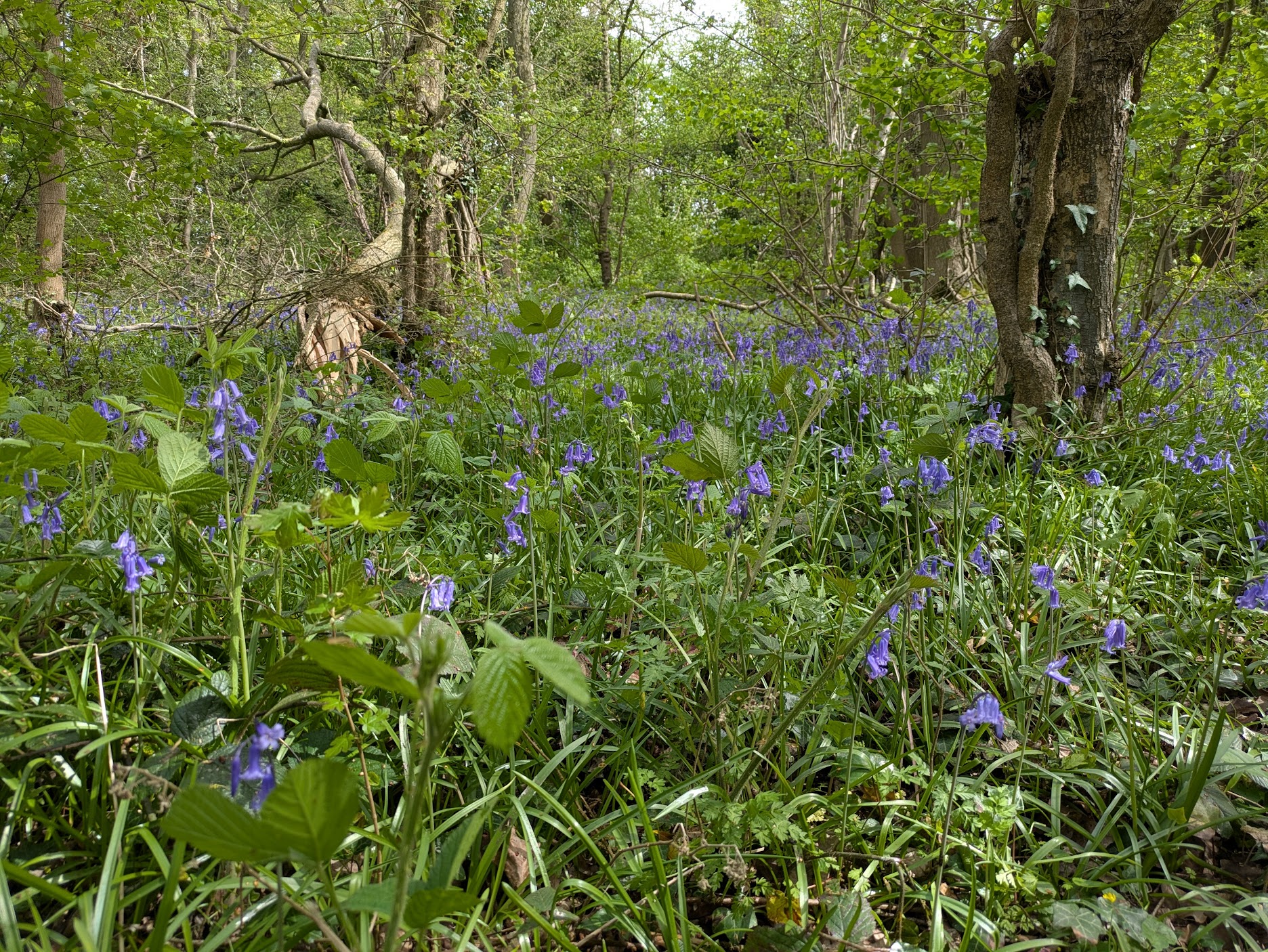
Springtime is bursting forth and everything is arriving and flowering early. For me it also brings seven sets of marking across the education providers where I work. These include marking health practitioner business plans and herbalist research skills. Also individual final research projects from our NCIM Extended Diploma in Integrative Healthcare qualification.
All of this work is a source of marvellous inspiration. Learners put an enormous amount of effort into completing this work, and it always feels like wasted knowledge as the materials sit tucked away on course content platforms. I wish we could put this collective effort to better use for society and the environment more generally.
A big change I see now is the use of artificial intelligence (AI) language tools in writing and research. I do have a fear around this, particularly as our attention spans have eroded, or as marketeers lead us to believe. My fear is people will loose their writing skills and critical thinking ability if using AI to turn out “slop“. Similar fears for learning and teaching arose with the advent of Wikipedia over twenty years ago. Teachers and academics were worried that students would copy everything from there. What many of us did instead was talk through the strengths and weaknesses of it and teach students skills by critiquing it and becoming more web savvy. With AI it is more challenging as the text is impermanent and there is great debate on who or what you put as a citation. Fortunately there are software tools to detect the “slop” but we aren’t teaching learners how to use it in a critical and meaningful way.
I suspect using AI in integrative healthcare or herbal medicine will bring many biases as the narrative is often strongly against these forms of holistic medicine. As the AI tools apply to and regurgitate digital content and not the world beneath, stories, nuance, history and artistic views may all be lost from the generated text. AI addresses what has already been produced, but will not generate new ideas and thinking. Do read anything by Helen Beetham on the subject, such as this 2024 article about AI and education.
None of the tools that do the writing or research scientific articles for you do so in a critical manner that would result from applying a few seconds of brain-power. As Helen says, let’s not loose other ways of seeing and exploring the world – which for herbalists and other therapists may include sensory, botanical, qualitative, quantitative and sometimes spiritual lenses. A few years ago there was big interest in cognitive training for our aging brains, and possibly the interest arose because our brains were getting lazy through modern life. These ideas have a serious research underpinning. What we may see in a few years with those using AI for absolutely everything is an erosion of brain power and thinking skills. That’s fine if you wish to live in a bucket of slop.