This is a celebration of Herbal Reality which is a UK-based open-access platform for herbal research, monographs and practice discussions. The site is an amazing resource and includes tips on how to make your own remedies, recipes, research, and highlights important issues like the sustainability of global herb supplies.
My “research seeds” are published each month and for these I review newly published interesting randomised controlled trials (RCT) and systematic reviews (SR) on the safety and efficacy of herbs.
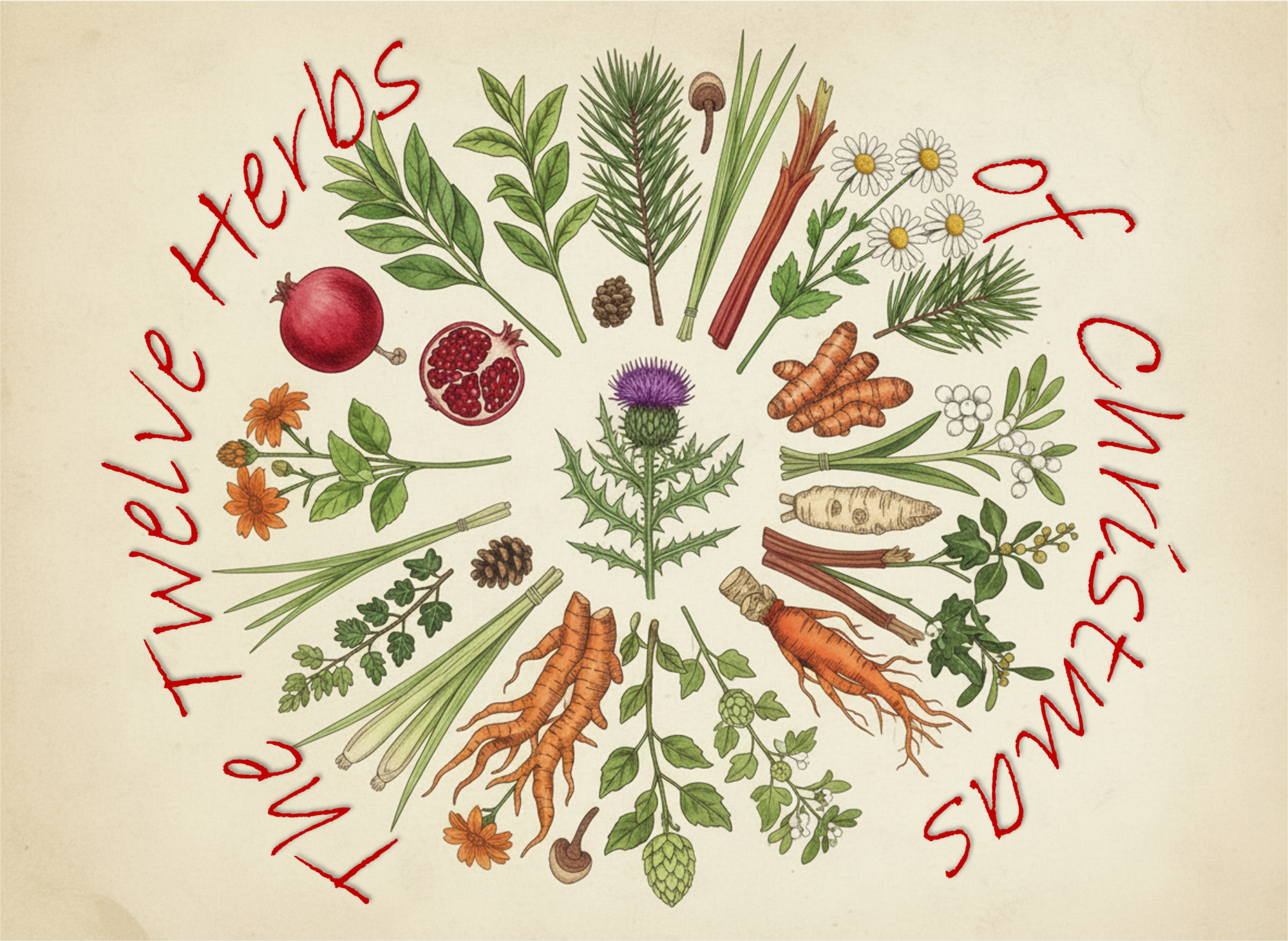
I hope you enjoy this summary of some of my favourite research seeds from 2025, to the tune of the Twelve Days of Christmas! Do sing along.
On the first day of Christmas, my herbalist sent to me
A gram of Shatavari.
In this study, ingestion of 1 g of shatavari a day for 6 weeks improved hand-grip strength and some muscle biomarkers in post-menopause women. Shatavari (Asparagus racemosus) is an Ayurvedic herb used as a tonic for the female reproductive system. There is a comprehensive programme of research on shatavari from Exeter University characterising the skeletal muscle-strengthening effects of the herb, and how it alters the muscle proteome and protein expression.
On the second day of Christmas, my herbalist sent to me
Pomegranate peel
In this study, an extract made with pomegranate peel (Punica granatum) was ingested for 8 weeks and compared to a placebo. The study participants were patients diagnosed with non-alcoholic fatty liver disease, and they also followed a Mediterranean diet with a lowered calorific intake. The pomegranate improved metabolic biomarkers and reduced hepatic steatosis compared to the placebo.
OK, I’ll let you sing the words for yourself now! Here are the remaining days of Christmas.
On the third day of Christmas my herbalist sent to me
Sweet basil
In a triple-blind study, sweet basil (Ocimum basilicum) was ingested for one month, and relieved symptoms of menopause compared to a placebo. Women were questioned on their symptoms and saw improvements in hot flushes and mood changes. The researchers were interested in basil compounds like flavonoids and phytosterols that may be able to modulate oestrogen. More research is needed to know how basil is working in the body.
On the fourth day of Christmas my herbalist sent to me
Extract of pine bark
Pine is very well researched, and in this systematic review the authors found 27 randomised-controlled trials on pine bark. (A systematic review is a type of article that pools data from all existing trials on a topic). The pine bark was given as an extract for 24 weeks and it improved cardiometabolic risk factors such as reducing body weight, reducing blood pressure, and improving blood lipid and glucose profiles, compared to placebo. More research is needed to show how pine bark might work, but one of the main compounds is procyanidin which has anti-inflammatory and antioxidant actions.
On the fifth day of Christmas my herbalist sent to me
Five golden flowers
Arnica montana is a beautiful golden-yellow flower in the daisy family, and the plant has a history of traditional use in herbalism, homeopathy and anthroposophic medicine. Herbally it is used as a remedy for bruising and swelling. In this study, an arnica cream was applied topically to the gums after wisdom tooth removal and was compared to standard anti-inflammatory treatment and a control. Arnica reduced pain and improved trismus (jaw movement) compared to the other treatments.
On the sixth day of Christmas my herbalist sent to me
Green tea and rhubarb
I picked this one because it explored the effects of the plants on lipid and cholesterol levels, and also monitored the microbiota. We hear so much about how the gut flora regulates metabolism, brain function, sleep and mood, but in reality the research is at a very early stage, so this paper was a valuable addition to our knowledge and understanding. I also liked it because the plants were given as herbal teas.
There were three trial groups – a green tea control, a tea with high levels of rhubarb root (Rheum rhabarbarum) and a tea with high levels of senna leaves (Cassia angustifolia). Rhubarb tea reduced serum cholesterol levels and LDL-cholesterol levels. Senna tea did not. There were no significant changes in microbiota species between the teas, but the researchers found that patients with different lipid profiles had differing microbiota composition. More research is needed to understand whether herbs modify blood lipids directly or through acting on the microbiota.
On the seventh day of Christmas my herbalist sent to me
Withania for vitality
Withania somnifera – or Ashwagandha is an Ayurvedic herb and adaptogen. The root of the plant contains steroidal lactones and it is widely researched as an aid for sleep, anxiety and metabolic function. In this randomised-controlled trial ashwagandha was compared to a placebo, and participants were men suffering from fatigue. Ashwagandha improved fatigue and vigour scores over 8 weeks, but the changes were not sustained when the supplement was stopped. The herb enhanced testosterone levels compared to placebo. Other measures of psychological wellbeing did not change.
On the eighth day of Christmas my herbalist sent to me
Valerian for sleeping
Valerian (Valeriana officinals) needs no introduction for use as a sleeping aid, and is a herb widely used in herbal teas and supplements. In the study it was combined with another well-loved sedative hop (Humulus lupulus). The valerian-hop supplement increased sleep duration by 21 minutes per night compared to a placebo over a 21-day study period. This was accompanied by improved sleep scores overall. The study also measured cognitive function, mood and stress, but these did not change.
On the ninth day of Christmas my herbalist sent to me
Gourd lowers glucose
Using herbs in metabolic disorders is a very common topics in herbal research. A wide range of herbs and spices have been explored like cinnamon, ginger, fenugreek, and the pine bark and rhubarb already mentioned. This study was in pre-diabetic adults and used bitter gourd fruit powder (3.6 g a day for 12 weeks), and it reduced fasting plasma glucose and insulin, although other metabolic measures did not change. I liked this study because consuming foods is more than helpful to people than ingesting a supplement, and as large numbers of the population are pre-diabetic, this research is valuable.
On the tenth day of Christmas my herbalist sent to me
Lemongrass soothes anxiety
Back to dental treatments for this study. This study found that inhalation of lemongrass essential oil on a cotton gauze given to the patient reduced anxiety during dental procedures. The limitation was inability to blind the treatment as the strong aroma of the lemongrass would have made it obvious what the herbal treatment was. Given how common fear of dental treatment is, having herbal remedies to be calming is desirable. Other studies have found that lavender essential oil also relieves anxiety in the chair!
On the eleventh day of Christmas my herbalist sent to me
Turmeric relieves joint pain
The rhizome of turmeric (Curcuma longa) is like its spicey cousin ginger in that it is a natural anti-inflammatory and pain-relieving plant. There are so many RCT that have shown turmeric to be effective in relieving pain in osteoarthritis, typically of the knee. This systematic review summarised the available studies and compared different preparations of turmeric supplements that are available.
A combination of turmeric extract alongside standard non-steroidal anti-inflammatory drug (NSAID) treatment improved pain and joint function scores compared to turmeric alone, or NSAIDs alone. This is an important result as using herbs alongside a reduced dose of NSAIDs can reduce the nasty side effects of the drugs like stomach ulcers or cardiovascular problems.
On the twelfth day of Christmas my herbalist sent to me
Ivy leaf stops coughing
This was our December research seed for Herbal Reality and you’ll have to look out for it on the site as it is not published yet. Ivy leaves are saponin-rich and are traditionally used for respiratory support. In the study, participants with cough took ivy leaf extract in a syrup or placebo for 7 days. Ivy leaf reduced the severity of cough compared to the placebo, and patients saw improvements within the first visit back to the Doctor, showing that it was fast-acting.
So all together now…
Ivy leaf stops coughing
Turmeric relieves joint pain
Lemongrass soothes anxiety
Gourd lowers glucose
Valerian for sleeping
Withania for vitality
Green tea and rhubarb
Five golden flowers
Extract of pine bark
Holy basil
Pomegranate peel
And a gram of Shatavari.
What a year. It is super to see teams around the world as passionate about researching herbs as ever. Note that for many of these plants, more research is needed as the studies were small. For other plants, the evidence-base is quite substantial and systematic reviews have been carried out where many clinical trials exist. I would always reach for any remedy within a herbal tea or food supplement as this is the most likely to be safe, but always follow the exact instructions on the packaging. If you have a long-term condition or are on medication already, I’d visit your nearest Medical Herbalist first rather than explore remedies by yourself.